

Knife Skills Basics
Mastering Knife Skills Basics is one of the most impactful steps a home cook can take to improve efficiency safety and the overall quality of food. Whether you are preparing a simple salad or a multi component dinner plate strong fundamental knife techniques will make tasks faster more enjoyable and safer. This guide covers essential grips cutting techniques knife selection maintenance and safe practices so you can build confidence in the kitchen.
Why Knife Skills Basics Matter
Good knife skills reduce prep time create uniform results and improve food presentation. Even slices cook more evenly and a uniform dice elevates texture and mouth feel. Beyond aesthetics speed and consistency a correct technique prevents slips that can lead to injury. Developing reliable habits early prevents bad tendencies that are hard to undo later.
Choosing the Right Knife
Knowing which knife to use is a core part of Knife Skills Basics. Invest in one good chef knife for most tasks. A chef knife with a comfortable weight and balance lets you control the blade with minimal strain. Add a paring knife for peeling small fruits and a serrated knife for bread and some ripe tomatoes. As you gain experience you may choose to expand your collection but start with quality over quantity.
How to Hold a Knife
Grip matters more than many cooks realize. Use the pinch grip where you place your thumb and index finger on either side of the blade near the handle while the remaining three fingers wrap around the handle. This grip improves control and reduces wrist fatigue compared to holding the handle only. Practice holding the knife when you are not cutting to get comfortable with the feel and balance.
Mastering the Guiding Hand
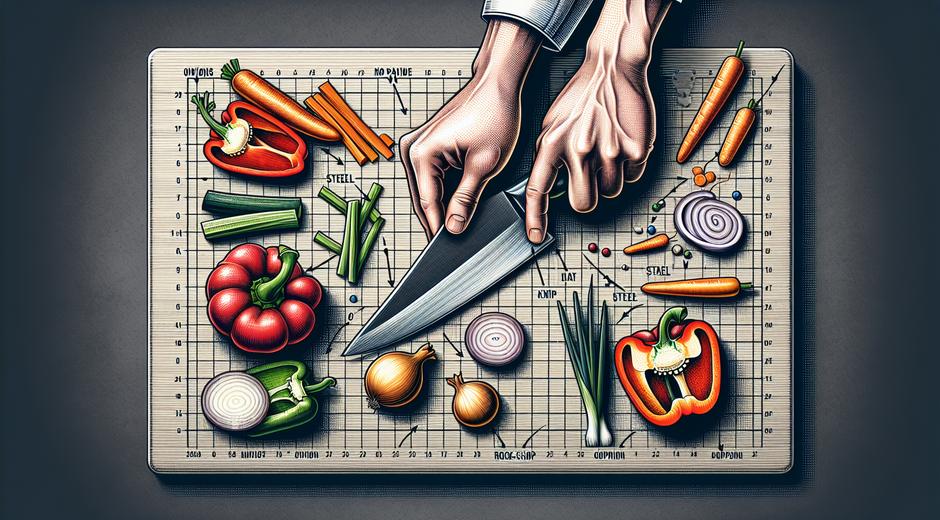
Your non cutting hand is the guide that secures the ingredient and maintains consistent shapes. Curl your fingertips inward toward your palm and use your knuckles as a stop for the knife blade. Move the food with your knuckles leading so the blade rests against them while you slice. This method keeps fingertips safe and helps you create uniform slices and dices.
Essential Cuts Everyone Should Know
Learning a few key cuts covers most kitchen tasks. Practice these until you can perform them smoothly and consistently.
1. Slice Fruit and Vegetables into thin rounds by holding the item steady with your guiding hand and moving the blade in a forward and downward motion while keeping the tip lightly touching the cutting board.
2. Julienne into slim matchstick shapes by first trimming the item into a flat surface then slicing into even slabs stacking and cutting into narrow sticks.
3. Dice by creating even slices then turning and slicing again to form cubes. Aim for consistent size so cooking times match.
4. Mince by rocking the knife back and forth over small pieces while keeping the tip near the board. Use the pinch grip to guide controlled motion.
Knife Motion and Rhythm
For many tasks the most efficient motion is a controlled rocking action where the blade maintains contact with the board from tip to heel. For long vegetables like carrots or cucumbers a forward push and pull tactic works well. Practice slowly focusing on steady rhythm and consistency rather than speed. Over time you will naturally increase pace while retaining control.
Maintaining Your Knife
Part of Knife Skills Basics is caring for the tool itself. Keep the blade sharp because a sharp knife is safer than a dull one. Dull blades require extra force which increases the chance of slips. Use a honing rod before each use to align the edge and sharpen with a stone or quality sharpener as needed. Wash knives by hand and dry them immediately to protect the steel. Store knives in a block or on a magnetic strip to prevent damage and accidents.
Choosing the Right Cutting Surface
Use wooden or plastic cutting boards that provide a stable surface and help preserve the blade edge. Avoid glass or stone boards that dull knives quickly. Place a damp cloth under the board to prevent slipping if your surface is unstable. A stable cutting platform is a basic safety step often overlooked by beginners.
Safety Tips for Confident Practice
Safety is a central component of Knife Skills Basics. Pay attention to the following practices to reduce risk and improve control.
1. Always cut away from your body and keep fingers tucked. The guiding hand should hold the food securely while keeping fingertips out of the blade path.
2. Keep the blade clean and dry to prevent slippage from oils or juices.
3. Take breaks if you feel fatigued. Fatigue reduces coordination and raises the chance of mistakes.
4. Never try to catch a falling knife. Step back and let it fall to avoid injury.
Practical Exercises to Build Skill
Regular practice improves speed precision and confidence. Set aside ten to fifteen minutes a few times per week to run through basic exercises. Start with a carrot and practice thin slices then move to julienne then to dice. Repeat the same cut until pieces are consistently sized. Try timing yourself and focus on maintaining quality while gradually reducing time.
Applying Knife Skills to Recipes
Once you are comfortable with basic techniques bring those skills into real recipes. For salads practice nice even ribbons of cabbage and delicate slices of radish. For soups aim for consistent dices so vegetables cook uniformly. Good knife work transforms the final plate and often improves flavor because evenly cut pieces cook at the same rate.
Learn from Visual Resources
Watching a professional demonstrate Knife Skills Basics can accelerate learning. Visual guides show the angle of the blade the pacing and the hand positions that are difficult to convey with text alone. For step by step videos and demonstrations you can check reputable tutorial sites that focus on technique and safety. For convenient access to visual content that complements written instruction consider browsing curated video collections at Moviefil.com where you can watch demonstrations and practice along.
Developing a Personal Practice Routine
Create a routine that blends practice with real cooking tasks. Start each session with five minutes of sharpening and honing then choose one vegetable or protein to practice cuts on. Rotate between different items so you develop versatility. Keep a notebook or a short video log to track your progress and note areas that need improvement.
Bringing It All Together
Knife Skills Basics are foundational for any cook. With intentional practice you will gain speed safety and confidence. Focus on grip guiding hand motion and consistent practice while maintaining your tools and respecting safety guidelines. If you enjoy food techniques recipes and kitchen tips visit tasteflavorbook.com for more articles that expand on technique and recipe ideas. Strong knife skills will serve you for a lifetime making cooking simpler more enjoyable and more satisfying.
Start small practice often and celebrate the improvements you notice in time efficiency texture uniformity and presentation. Knife Skills Basics are about building habits that protect your hands and elevate your food. With every cut you refine your craft and develop the confidence to tackle more complex dishes.